

Discover how ALOXTEC’s process improves the performance of VCSELs in Automotive LiDAR and Intelligent Mobility.
Automotive LiDAR represents a fundamentally different manufacturing environment compared to consumer electronics or datacom. In this sector, performance alone is not sufficient: reliability under extreme thermal, mechanical and operational conditions is a non-negotiable requirement. VCSEL devices must operate consistently over 10 to 15 years, across wide temperature ranges and continuous vibration, while meeting strict automotive qualification standards such as AEC-Q102.
This page translates these constraints into their direct implications for VCSEL wet oxidation process control, and explains how ALOXTEC’s equipment addresses the combined challenges of reliability, beam quality, process traceability and long-term production stability in automotive LiDAR applications.
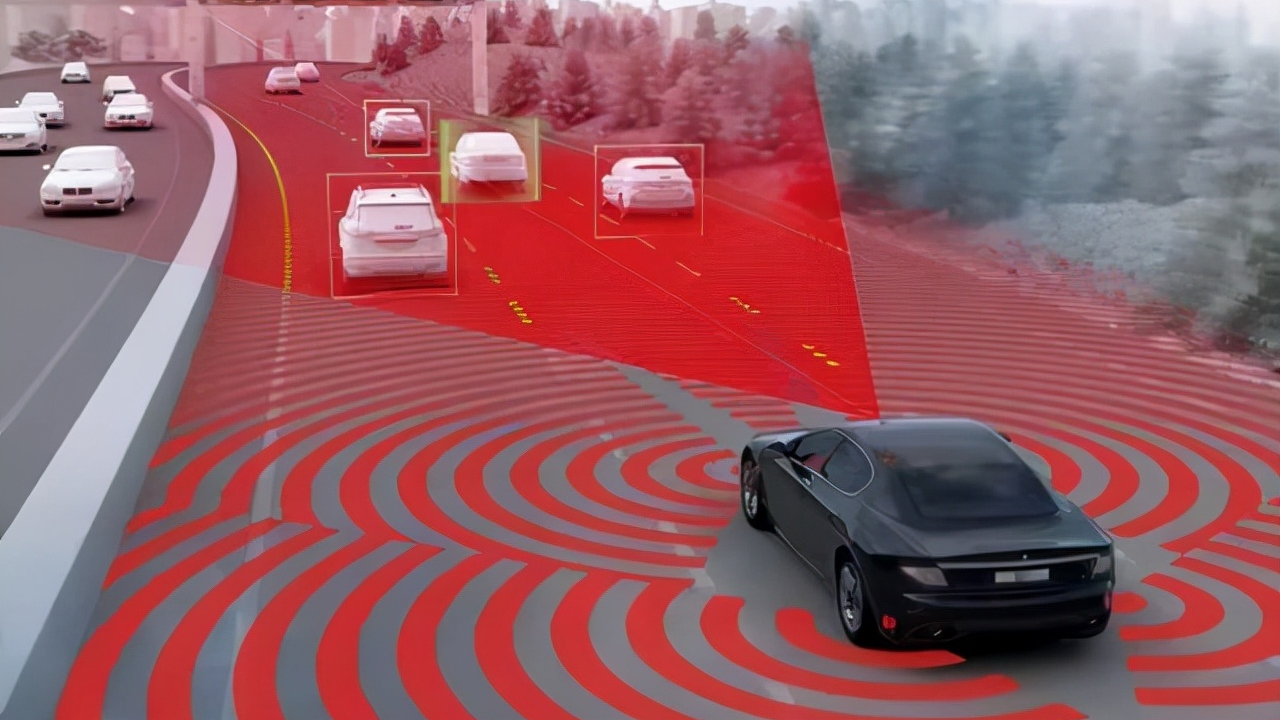
Advanced driver assistance systems (ADAS) and autonomous driving perception systems rely on LiDAR sensors to generate high-resolution 3D maps of the vehicle’s surroundings in real time. As these systems migrate from driver assistance features toward higher levels of driving automation, the performance and reliability requirements imposed on LiDAR components intensify accordingly. A LiDAR sensor failure in a safety-critical perception application is not a product quality event: it is a functional safety event, with consequences that extend beyond the warranty liability of the component manufacturer.
This context defines the fundamental difference between automotive LiDAR VCSEL manufacturing and every other VCSEL application. In consumer electronics, yield and cost per die are the primary metrics. In datacom, bandwidth and wavelength stability are the primary metrics. In automotive LiDAR, reliability under extreme conditions over extended lifetimes is the primary metric, and it is a threshold requirement: a component that does not pass AEC-Q102 qualification does not enter the supply chain, regardless of its optical performance.

The long-term reliability of an automotive LiDAR VCSEL is determined primarily at the wet oxidation step. The oxide aperture defines the optical and electrical characteristics of the device, but the quality of the AlGaAs/AlOx interface determines how long those characteristics remain stable under the thermal and mechanical stress of in-vehicle operation. Oxide layer delamination is the dominant field failure mode in high-power VCSELs under thermal cycling. Its root cause is residual interfacial stress accumulated during oxidation, amplified by the arsine entrapment that occurs at elevated chamber pressures. The ALOXTEC low-pressure process addresses this failure mechanism at its physical origin, not through post-process screening.
Automotive LiDAR encompasses several sensing architectures, each with specific VCSEL operating conditions that translate into distinct wet oxidation requirements.
| Automotive requirement | Origin and specification context | Direct consequence for wet oxidation process |
|---|---|---|
| AEC-Q102 reliability qualification | The AEC-Q102 standard defines the qualification requirements for optoelectronic components used in automotive applications. It mandates accelerated reliability testing across thermal cycling (typically −40°C to +125°C), high-temperature operating life, and humidity exposure. Components that fail AEC-Q102 qualification cannot enter the automotive supply chain. | AEC-Q102 thermal cycling test is the most discriminating reliability screen for VCSEL oxide layer quality. The mechanical stress generated at the AlGaAs/AlOx interface by repeated temperature excursions from −40°C to +125°C is the primary driver of oxide delamination failures. Low-pressure oxidation and integrated post-oxidation annealing in the ALOXTEC process are required to produce oxide layers with sufficiently low residual interfacial stress to pass AEC-Q102 qualification. |
| Extended operational lifetime (10 to 15 years in-vehicle) | Automotive components are expected to operate reliably for the lifetime of the vehicle, typically 10 to 15 years, under continuous or high-duty-cycle operation. For LiDAR VCSEL arrays, this means sustained high-power pulsed operation across tens of thousands of hours of cumulative operation. | Long-term oxide layer stability under sustained thermal and electrical load is the critical process quality dimension. The delamination failure mode, which may not manifest during short-duration reliability screening, can emerge progressively over thousands of operating hours. The ALOXTEC low-pressure process minimises the interfacial defect density that acts as the initiation site for this progressive failure mechanism. |
| High optical power and aperture circularity for LiDAR beam quality | LiDAR VCSEL arrays for automotive perception must deliver peak power densities far exceeding those of consumer devices, while maintaining precise beam geometry for accurate angular resolution in the point cloud. Aperture circularity determines beam divergence symmetry, which directly affects the angular resolution and the false positive rate of the LiDAR system. | Aperture circularity is a controlled output of the ALOXTEC characterisation equipment, measured as part of the standard five-output endpoint dataset. Systematic circularity deficiencies indicate asymmetric T/H/P conditions within the chamber, addressable through UniformPerf© thermal gradient compensation. The circularity index provides a production-run quality gate for beam geometry without requiring external optical characterisation. |
| Functional safety and zero undetected failures (ASIL compliance) | Automotive safety integrity levels (ASIL) impose requirements on the detectability of component failures within the vehicle system. LiDAR VCSEL arrays used in safety-critical perception functions may be subject to ASIL-B or ASIL-D requirements, which constrain the acceptable rate of undetected failures over the operational lifetime. | Zero undetected failure requirements translate into a process quality standard where latent oxide layer defects, which do not cause immediate device failure but represent future failure risk, must be minimised at the process step. The combination of low-pressure oxidation, water-limited process conditions and in-situ characterisation at every run provides the process quality assurance framework required to support functional safety compliance. |
| Tier 1 supply chain qualification and process control documentation | Automotive Tier 1 suppliers and OEMs impose rigorous supplier qualification processes on component manufacturers. These include process capability studies (Cpk), measurement system analysis, and ongoing process control documentation that must be maintained throughout the production campaign. | The ALOXTEC SECS/GEM interface and in-situ characterisation system provide the process data infrastructure required for automotive supplier qualification. Per-wafer aperture maps, run-to-run repeatability statistics and process parameter traces are available as structured data for Cpk calculations and measurement system analysis. The σ < 0.1 µm run-to-run deviation with UniformPerf© provides the process capability baseline required for automotive Tier 1 qualification. |
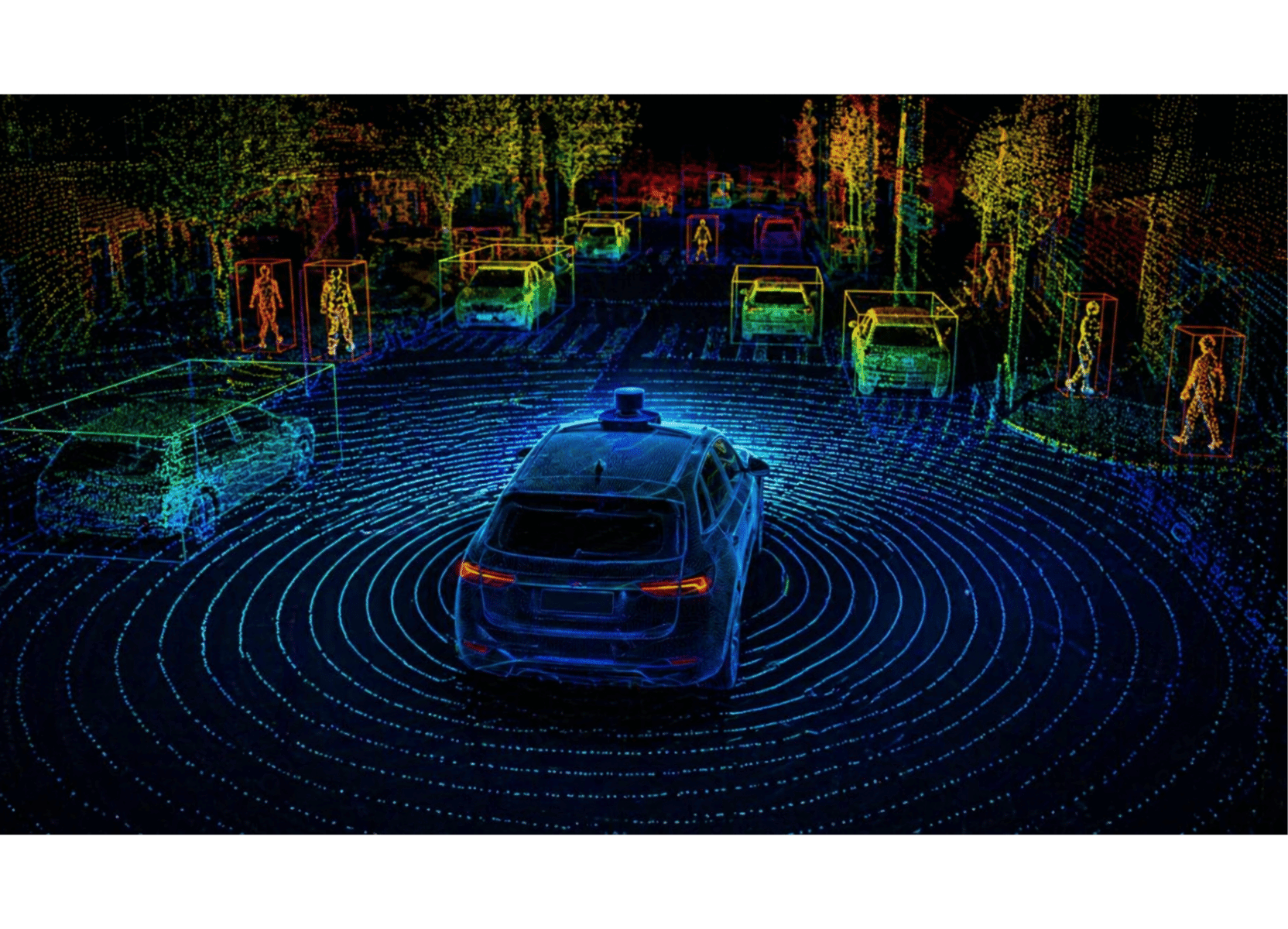
The automotive LiDAR market encompasses three distinct sensing architectures, each with different VCSEL operating conditions and correspondingly different wet oxidation requirements.
| LiDAR architecture | VCSEL operating mode | Wet oxidation requirement |
|---|---|---|
| Direct time-of-flight (dToF) flash LiDAR | Large-area VCSEL array operated in pulsed mode. Short, high-peak-power pulses across the full illumination field simultaneously. Array uniformity is critical for uniform scene illumination. | Array-level aperture uniformity determines the spatial uniformity of peak optical power across the illumination field. Non-uniform apertures produce non-uniform threshold currents across the array, causing intensity variation in the illumination pattern and degrading depth measurement accuracy at lower-intensity regions. |
| Scanning LiDAR (MEMS or rotating mirror) | Single VCSEL or small VCSEL sub-array as a point source. High peak power at a single spatial location. Beam quality and circularity are primary specifications. | Aperture circularity is the dominant process quality parameter: an elliptical aperture produces an asymmetric far-field beam that degrades the point spread function of the LiDAR system and reduces angular resolution. Single-aperture VCSEL sources also require the tightest absolute aperture control. |
| FMCW LiDAR (frequency-modulated continuous wave) | Single-mode VCSEL with precise wavelength and coherence properties. Emerging architecture for next-generation automotive perception with velocity measurement capability. | FMCW LiDAR requires single-mode VCSEL operation, which imposes tightly controlled aperture targets and extremely demanding circularity specifications. The oxide aperture must produce a single, stable transverse mode. Stop-on-Aperture precision below 3 µm and UniformPerf© uniformity are required. |
A critical insight for automotive LiDAR VCSEL process engineers is that reliability and optical performance are coupled through the oxidation process conditions. A process optimised exclusively for aperture precision at the expense of interface quality, as may occur under high-pressure, high-water-activity conditions, will produce devices that pass initial optical characterisation but fail AEC-Q102 thermal cycling. Conversely, the ALOXTEC process architecture, which combines low-pressure operation, water-limited conditions and integrated annealing to maximise interface quality, also produces apertures with superior circularity and lower optical scattering loss, because the same process conditions that reduce interfacial stress also produce a sharper, more abrupt oxide transition at the aperture boundary.
This coupling means that the ALOXTEC reliability process is not a trade-off against optical performance. It is a process architecture that optimises both simultaneously, at the same operating point, without compromise.


AEC-Q102 qualification requires the component manufacturer to demonstrate not only that a sample of devices passes the specified reliability tests, but that the manufacturing process is sufficiently controlled and documented that the qualification results are representative of every production unit. This requires process capability studies, measurement system analysis, and ongoing statistical process control documentation for the critical process parameters, including the oxidation step.
The ALOXTEC in-situ characterisation system and SECS/GEM interface provide the data infrastructure that supports this documentation requirement. The per-wafer aperture maps, circularity indices, run-to-run repeatability statistics and process parameter traces generated by the ALOXTEC system on every production run are structured, archivable data that can be used directly for AEC-Q102 process capability documentation. The σ < 0.1 µm run-to-run aperture deviation with UniformPerf© provides a quantified process capability baseline that satisfies the statistical process control requirements of automotive Tier 1 supplier qualification frameworks.
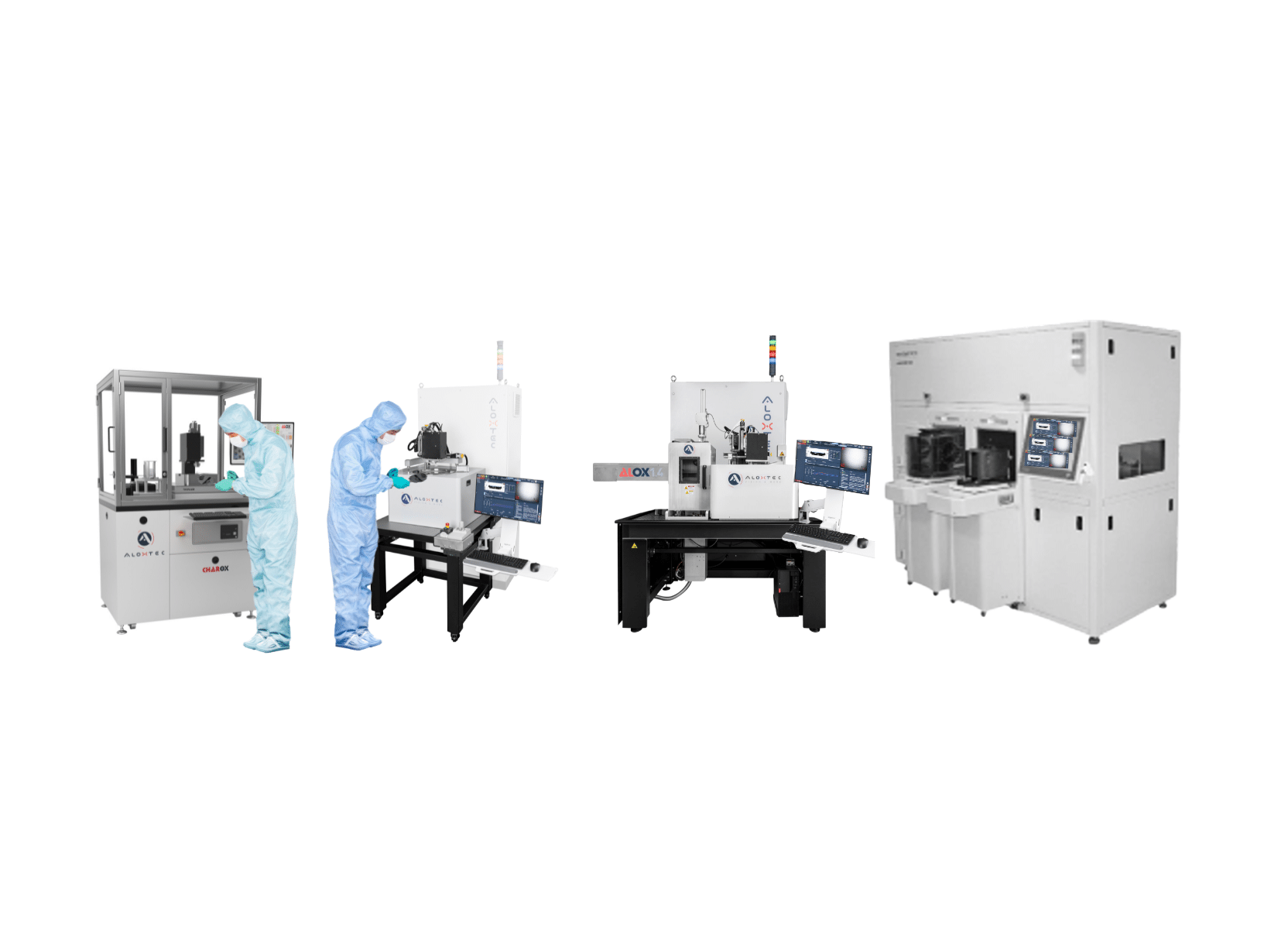
AEC-Q102 qualification is performed on devices manufactured on a specific, documented process. Any change to the manufacturing process after qualification, including a change of oxidation equipment, typically triggers a requalification requirement. This makes process continuity across equipment transitions a commercial as well as a technical concern for automotive VCSEL manufacturers.
The ALOXTEC equipment eliminates this risk through recipe portability. The process qualified on the ALOX GEN1.4L Auto transfers without modification to the ALOX GEN2.0 HV Auto. The qualification status of the process is preserved at the machine transition, because the process chamber architecture, the oxidation process conditions and the in-situ characterisation methodology are identical across both equipment. Capacity expansion on the ALOXTEC equipment does not create a requalification obligation.

For automotive LiDAR VCSEL applications requiring aperture circularity control, ALOXTEC recommends UniformPerf© as a configuration on qualification and production systems. The active thermal gradient compensation delivered by UniformPerf© improves aperture circularity as a direct consequence of homogenising the spatial temperature field across the wafer, without any process recipe modification. For scanning LiDAR and FMCW LiDAR architectures where circularity is a primary beam quality specification, UniformPerf© is in practice a technical requirement for meeting the device specification consistently across production lots.
ALOXTEC’s expertise in automotive LiDAR VCSEL manufacturing is built on advanced process control technologies and a strong track record in high-reliability photonic environments. The following questions address the key challenges faced by manufacturers targeting automotive qualification and long-term field reliability.
 Save as PDF