
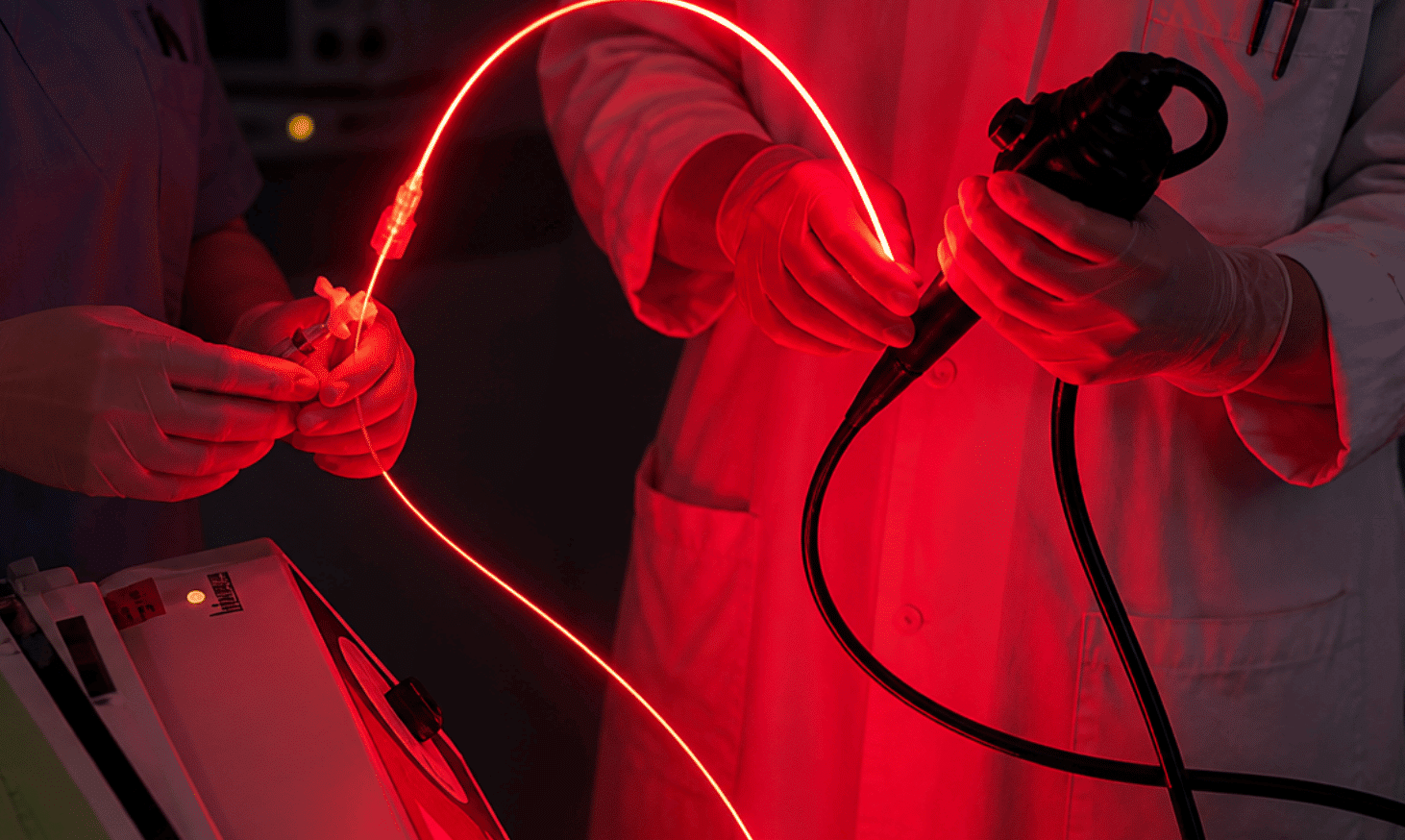
Discover how ALOXTEC’s process improves the performance of VCSELs in Industrial Sensing and Healthcare Photonics.
Industrial sensing and healthcare photonics represent some of the most technically demanding environments for VCSEL and EEL manufacturing. Unlike consumer or datacom applications, these markets require a combination of wavelength precision, long-term reliability and process adaptability across diverse product portfolios. Wet oxidation becomes a critical process step, directly impacting emission wavelength stability, device lifetime and regulatory compliance. ALOXTEC’s equipment range is designed to address these combined challenges, enabling manufacturers to achieve consistent performance across multiple applications while maintaining full process traceability.
Industrial sensing and healthcare photonics together encompass a wide range of laser applications, each with distinct optical specifications but sharing a common set of process requirements: wavelength precision, long-term reliability, and the process documentation depth required by regulated or safety-critical end markets.
| Application | Laser technology | Key performance requirement | Wet oxidation consequence |
|---|---|---|---|
| Gas sensing and spectroscopy (TDLAS) | Single-mode VCSEL or EEL at precisely defined wavelength for absorption line targeting. | Emission wavelength must fall within a few picometres of the target gas absorption line. Wavelength stability over temperature and operating time is a primary specification. | Aperture size controls emission wavelength through the effective refractive index. Aperture size deviation control is required for wavelength-stable single-mode VCSEL production for TDLAS applications. |
| Optical coherence tomography (OCT) | Broadband near-infrared light source or tunable laser. EEL or VCSEL-based swept-source configurations. | Coherence length, spectral bandwidth and output power stability determine imaging depth and resolution in ophthalmology and cardiovascular diagnostics. | Aperture uniformity and interface quality determine spectral purity and long-term power stability. Oxide layer reliability under sustained CW operation is critical for medical device lifetime requirements. |
| Flow cytometry | CW VCSEL or EEL at 405 nm, 488 nm, 638 nm or 785 nm for fluorescence excitation. | Precise wavelength, low noise, and long operating lifetime under continuous high-duty-cycle operation in a clinical laboratory environment. | Long-term oxide layer stability under sustained CW operation at elevated junction temperatures is the reliability-defining process requirement. Low-pressure oxidation and post-oxidation annealing are required. |
| Industrial range finding and 3D measurement | Pulsed VCSEL array for time-of-flight distance measurement in factory automation and robotics. | Peak power, pulse repeatability and thermal stability across the industrial temperature range. IP-rated enclosures impose thermal constraints. | Aperture uniformity determines pulse-to-pulse power consistency. Oxide layer reliability under industrial thermal cycling is required for extended maintenance intervals. |
| Photodynamic therapy and dermatology lasers | High-power EEL at therapeutic wavelengths (630 nm to 850 nm). | Precise output power, stable wavelength and long-term reliability under high-duty-cycle operation in clinical environments. | EEL oxide canal geometry determines current confinement efficiency. Optimised canals improve slope efficiency and reduce thermal load at equivalent output power. |
| Barcode reading and laser printing | VCSEL or EEL at 650 nm to 850 nm for high-duty-cycle scanning applications. | Long operating lifetime under continuous operation and reliability at elevated ambient temperature. | Oxide layer delamination resistance under sustained thermal and electrical stress is the primary reliability requirement. ALOX low-pressure oxidation ensures long operating lifetime. |
Across the diversity of industrial and healthcare applications in the table above, wavelength stability emerges as the most broadly shared process quality requirement. Whether the target is a specific gas absorption line for TDLAS, a therapeutic wavelength window for photodynamic therapy, or a WDM channel for optical fibre sensing, m within a defined window that is set by the physics of the application, not by a manufacturing convention. This requirement maps directly to aperture size control in the wet oxidation step, because aperture size determines the effective refractive index of the VCSEL cavity and therefore the emission wavelength. Aperture size deviation control is not a performance aspiration in these applications: it is a functional specification boundary.

Industrial and healthcare VCSEL and EEL manufacturers face a combination of challenges that is distinct from both consumer electronics and datacom production. High reliability requirements coexist with lower volumes. Regulatory documentation requirements coexist with product portfolio diversity. The ALOXTEC equipment is designed to address this specific combination.
| Industrial/Healthcare challenge | Origin | ALOXTEC equipment portfolio response |
|---|---|---|
| Small production volumes with high reliability requirements | Industrial sensing and healthcare applications typically involve lower volumes than consumer electronics or datacom, but reliability requirements are as stringent as or more stringent than automotive. The cost of a field failure is disproportionate to the component value. | ALOX GEN1.4L Manual provides full Stop-on-Aperture precision, in-situ characterisation and low-pressure reliability process at throughputs optimised for development and small-volume production. Same equipment from production to R&D without process change. |
| Frequent product changes and epitaxial structure diversity | Industrial and healthcare laser manufacturers manage multiple products with different wavelengths, power levels and aperture specifications, each based on different epitaxial structures. | ALOX T/H/P process window, Stop-on-Aperture automation and recipe portability support all AlGaAs structures. Each recipe is stored and validated. Switching products requires only a recipe change, not a tool change. |
| Regulatory compliance and process documentation (IEC 60601, FDA 510(k), CE marking) | Medical laser components require strict process documentation and validation. Regulatory frameworks demand traceability and demonstration of process capability. | ALOX in-situ characterisation provides per-wafer data (aperture maps, repeatability, process traces) compatible with ISO 13485 and 21 CFR Part 820 requirements. |
| Multi-wavelength product portfolios | Healthcare laser manufacturers operate across multiple wavelengths, each requiring different epitaxial structures and process conditions. | ALOX in-situ wavelength mapping (monochromator) provides real-time feedback during oxidation. Eliminates post-process characterisation and accelerates development of new wavelength products. |
Edge-emitting lasers occupy a significant portion of the industrial and healthcare laser market, particularly at wavelengths below 800 nm and in high-power pump laser applications. The wet oxidation step in EEL manufacturing involves the formation of a current-blocking oxide canal adjacent to the active stripe, where the unoxidized canal width determines current confinement efficiency, threshold current and emission wavelength.
The ALOX process brings two specific advantages to EEL wet oxidation compared to conventional furnaces. First, superior pressure and flow control produces a thinner, more precisely defined oxide canal, improving current confinement efficiency and reducing the threshold current of the device. Second, low-pressure oxidation virtually eliminates AlGaAs layer delamination at the canal boundary, which is the primary long-term failure mode in high-power EEL devices under sustained CW operation. For healthcare laser manufacturers whose instruments operate at high duty cycles over multi-year service lifetimes, this reliability advantage directly translates into reduced field return rates and lower warranty costs.


For industrial and healthcare laser manufacturers, the transition from process development to production is often more resource-intensive than the development phase itself. A new device design requires process qualification on the production equipment, reliability testing to demonstrate the required operational lifetime, and, in regulated environments, documentation of the entire process validation sequence. If the production equipment differs from the development equipment, this qualification must be performed twice: once on the development tool and once on the production tool.
The ALOXTEC equipment eliminates this duplication. The ALOX GEN1.4L Manual and GEN1.4L Auto share the same oxidation process chamber, in-situ vision system and process control architecture. Every process recipe, every Stop-on-Aperture target, and every post-oxidation characterisation protocol developed on the GEN1.4L Manual transfers directly to the GEN1.4L Auto without modification and without requalification. The reliability data generated during development on the GEN1.4L Manual is directly representative of the production process on the GEN1.4L Auto, because the processes are physically identical.

For healthcare laser component manufacturers operating under ISO 13485, 21 CFR Part 820 or equivalent quality management frameworks, the manufacturing process for critical device components must be documented, validated and controlled in a manner that satisfies regulatory audit requirements. The ALOXTEC in-situ characterisation system provides the quantitative, per-wafer process data required for this documentation: aperture maps, circularity indices, run-to-run repeatability statistics and process parameter traces are generated automatically on every production run and available as structured data for quality management system integration.
The SECS/GEM interface on the ALOX GEN1.4L Auto extends this capability to full MES integration, enabling lot-level process traceability and automated quality hold workflows based on in-situ measurement results. For medical device manufacturers subject to design history file and device master record requirements, this data infrastructure directly supports the process validation documentation required at regulatory submission.
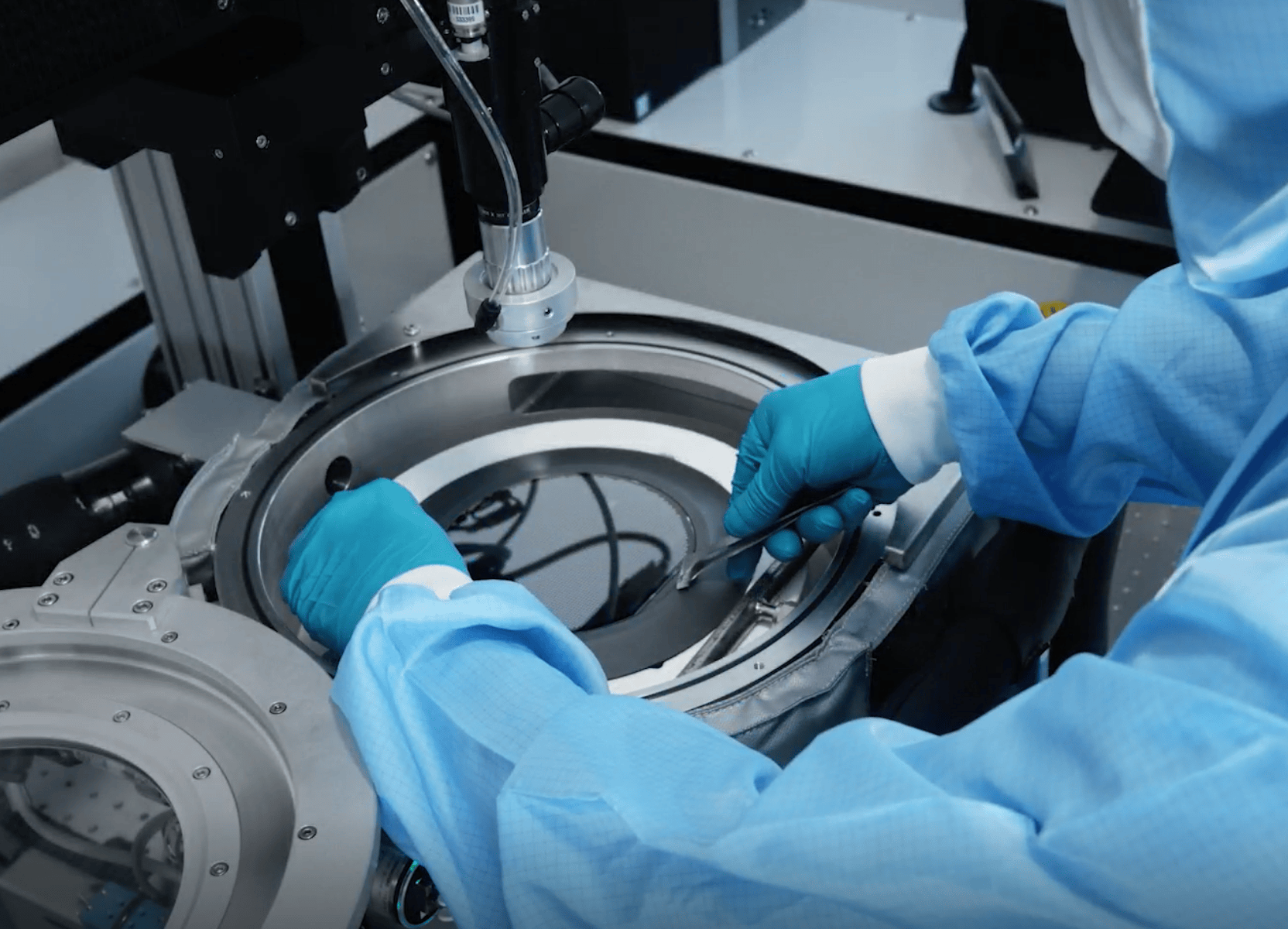
Industrial and healthcare laser manufacturers often operate with smaller process engineering teams than Tier 1 VCSEL manufacturers, and may be introducing wet thermal oxidation as a new process capability rather than optimising an established one. Aloxtec’s application engineering team provides process development support, including design of experiments for new epitaxial structures, process recipe development, and correlation of in-situ measurement data with device electrical and optical test results. This support is available from the earliest stages of process development through to production qualification.
Industrial sensing and healthcare photonics impose specific manufacturing constraints related to wavelength precision, long-term stability and regulatory compliance. The following questions address how these constraints translate into process requirements for VCSEL and EEL production, and how manufacturers can ensure consistent performance across diverse applications.
 Save as PDF